
Above:
Benjamin Ginsberg


The history of Rooibos Tea
Rooibos or Rooibosch tea (Aspalathus linearis) was probably originally used by the indigenous Khoi-descended people of the Clanwilliam area. They had a huge fund of knowledge of the dietary and medical value of the local wild plants.
When the Dutch settlers arrived, they adopted much of this knowledge and incorporated it into their own pharmacopoeias. One of their main herbal remedies, buchu, a diuretic, is now being used for medicinal purposes in the USA and Europe. Buchu grows alongside wild Rooibos tea plants in the Cedarberg Mountains of the Western Cape.
Through the 17th and 18th Centuries, European botanists visited the area, all of which commented on the profusion of “good plants” and their use as powders and diffusions for curative purposes.
In 1772, Swedish botanist Carl Thunberg noted, “of the leaves of Borbonia Cordata the country people made tea”. Borbonia was an earlier classification of Aspalathus - Rooibos!
Until the end of the 19th Century, the local people climbed up the mountains and cut the fine needle-like leaves from wild plants, chopped them with axes and bruised them with hammers before leaving them to dry in the sun.
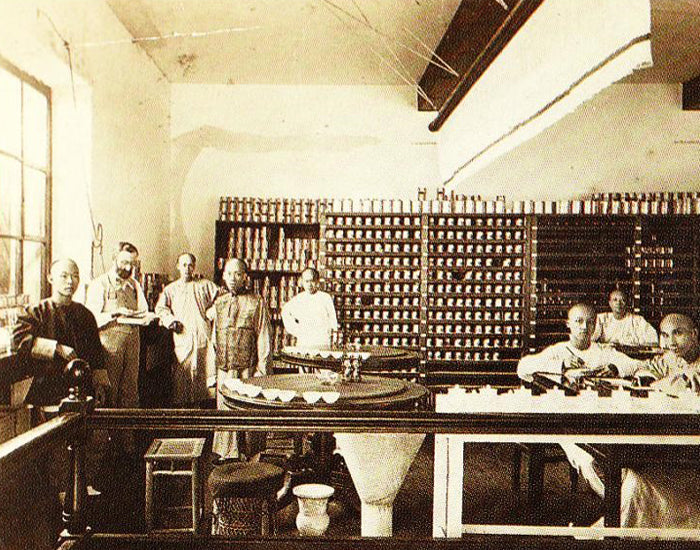
In 1904, Benjamin Ginsberg (a Russian who settled in South Africa, descendant of a famous tea family and grandfather of Bruce Ginsberg, managing director of Dragonfly teas) became fascinated by this wild plant and realised its potential as a marketable product. Despite its huge success, Rooibos is still “processed” in much the same way, in the open in the pure air of the mountains, still relying on the sun for drying, without chemicals or additives.
In the 1930s, Benjamin Ginsberg inspired Dr P Le Fras Nortier, a local doctor and nature lover to carry out experiments on cultivating the wild seeds. The results were so successful that Benjamin was able to encourage local farmers to begin the cultivation that would allow him to make the tea a commercial venture.
One of the biggest problems was the gathering of the seeds. Dispersed by the plants in the wild, they were no larger than a grain of sand and quickly were lost in the soil. So scarce were the seeds that in the 1930s the price soared to £80 a pound, making them probably the most expensive seeds in the world!
Despite this, one woman continually brought in large bags of the seed in contrast to the matchboxes delivered by other collectors. Eventually she told her story. One day while searching the dirt for the tiny seeds she noticed a species of black ant dragging a seed along the soil. She followed the ant back to its nest. On breaking it open she found a veritable granary!
Up to 25,000 seeds (450g) have been found in a single nest.
Today Rooibos is spreading fast across the world and is already hugely popular in the USA, Germany and Japan - a country renowned for its almost sacred regard for the art of tea making.
Spreading just as fast is the reputation of Rooibos as a “wonder” tea. Huge tracts of knowledge of the folk remedies of the ancient tribes has been lost although occasionally odd remedies are collected from old people in country areas. Here’s one for rheumatism: “Two handfuls of Rooibos tea, one handful of raisins, a handful of hops, a cake of yeast, 10 quarts of water and sugar added to taste. The tea, hops and raisins must be boiled then strained and the sugar and yeast added. The mixture is then boiled for ten minutes, bottled and allowed to stand for 48 hours. Frequent consumption is said to relieve the pains - and this has nothing to do with the presence of hops and yeast, we’re told!
More recently (and seriously), the world’s scientists have recognised Rooibos for its anti-allergic properties from quercetin - a flavonoid compound.
Japanese research has also suggested that it may have a beneficial effect on some skin conditions.
And in Britain, some animal herbalists recommend Rooibos tea as a way of calming excitable horses!